Lessons and tools from Kabakoo’s WhatsApp learning system
A practical playbook for organizations designing, building, and testing AI applications for livelihoods, with lessons from Kabakoo’s WhatsApp learning system.
Author
Kabakoo Academies
Published
September 14, 2026
Kabakoo Academies · September 2026
An AI response is a beginning. What can someone do with it?
Follow Kabakoo’s WhatsApp Learning System from an invitation to feedback, peer support, and work beyond the course. The aim is economic mobility. Use these lessons to build and test your own service.
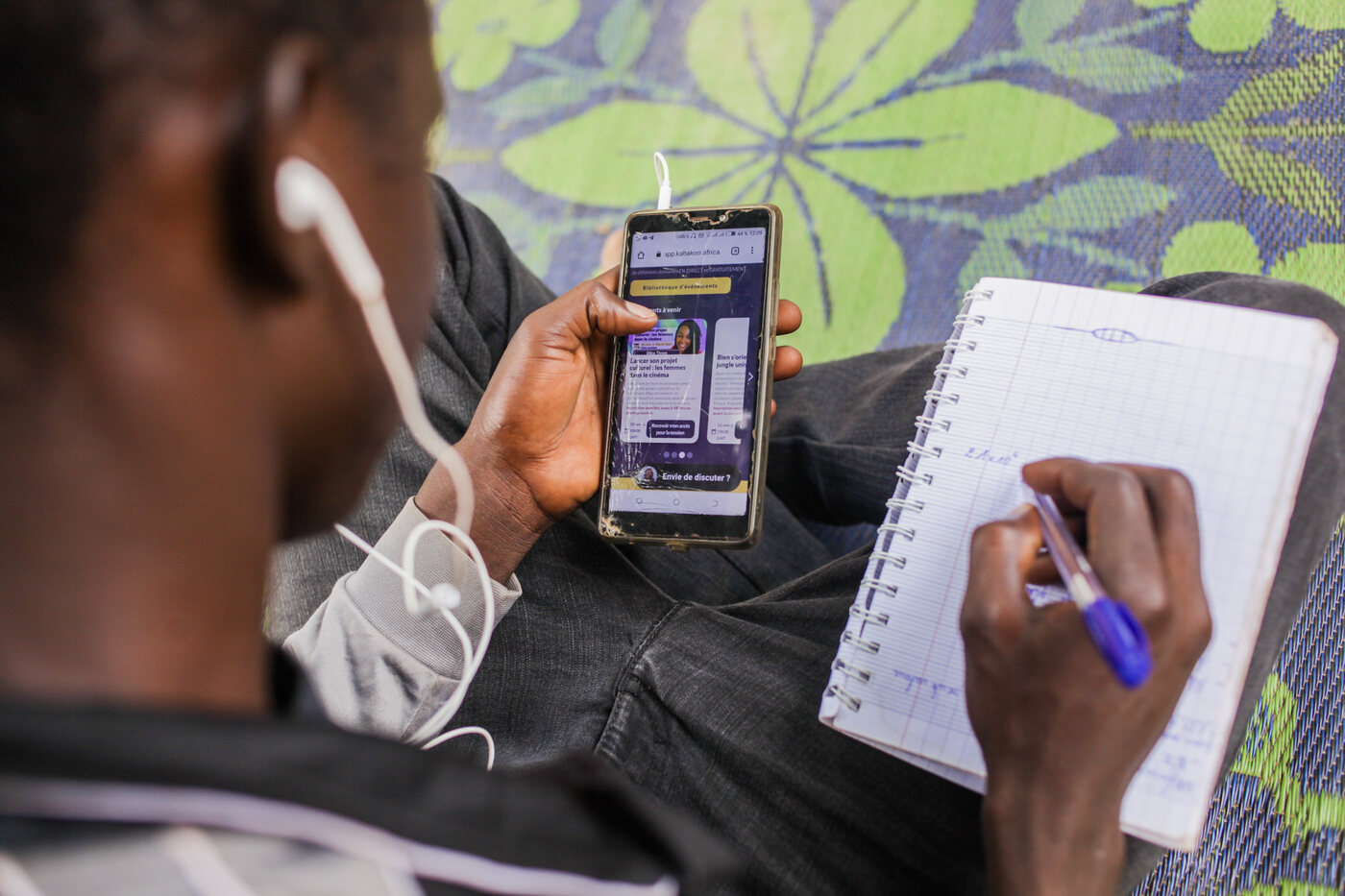
A learner with the Kabakoo app on a phone and a notebook. Photograph: Kabakoo Academies.The interface is the starting point.
Follow the work beyond the screen.
Meet the system behind the lessons
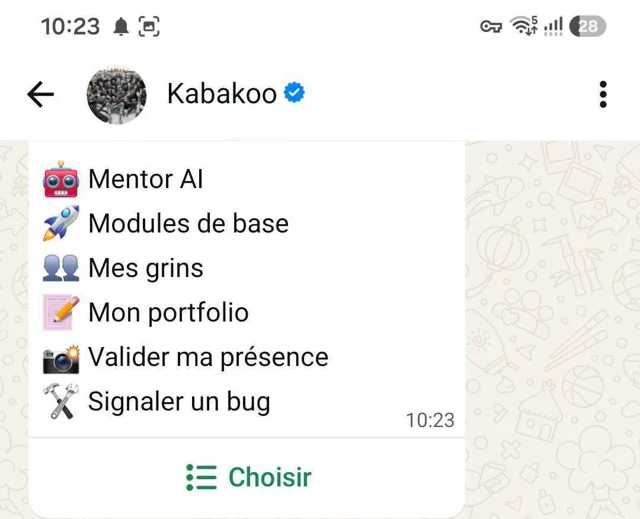
A daily task on WhatsApp. Feedback to work with. People to turn to. Kabakoo connects these parts around learning that can travel into someone’s working life.
6,671learners engaging through WhatsApp January–June 2026
826learners enrolled in the first Tremplin cohort Launched March 2026
One task opens the next conversation
Tremplin begins with a 30-day WhatsApp challenge: one short task each day, with the AI Mentor answering questions and reviewing work. The wider learning experience combines WhatsApp with app-based courses and portfolios, peer exchanges, and in-person sessions.
A task on a phoneAn attempt and revisionWork to return toAn exchange
Facilitators and mentors support the work in Kabakoo’s learning community. Peer Pods are being tested as a route into sustained collaboration. The 2026 service · Follow the learning sequence ↗
Feedback becomes something a person can use
MAÏMOUNA · STORYTELLING
The confidence to submit
Maïmouna describes AI feedback that showed her what to add or change and helped her submit videos. Her wider Kabakoo journey includes storytelling and digital marketing for her hair care brand, Aÿroün.
Soumaïla brought phone-repair experience into Kabakoo’s hybrid programs. New machine-hacking skills helped him repair the electronics of a pottery kiln that another business needed.
In Kabakoo’s broader hybrid programs, the 32-month follow-up found a stronger income profile among participants: 11% reported earning above 250,000 FCFA per month, compared with 7% in the comparison group. The share in the lowest bracket was also smaller, and participants reported more investment in their working lives.
The 2024 Mali youth trust survey put WhatsApp first among institutional contact channels: 21.5% of 1,079 respondents. It prompted Kabakoo’s turn toward WhatsApp. Explore the survey ↗
02
Make the first step easier
Jamie Walsh’s onboarding analysis directs attention to the invitation, sender, timing, and first action. Those are design decisions a team can test before adding more content. Examine first use ↗
03
Bring people into the learning loop
Elia Gandolfi’s analysis associates in-person participation with more WhatsApp activity. That makes earlier human contact a useful next experiment. Investigate continuation ↗
Years of learning by building
This playbook draws on more than six years of building and learning with AI at Kabakoo. In April 2020, members of our community were already working on image labeling and building AI solutions together. That December, our UNESCO workshop with Abeba Birhane and André Uhl examined how AI carries the values and assumptions of those who build it. We launched the first text version of our AI Mentor in March 2023 and introduced Bamanankan voice interaction in March 2024. Those experiences sit behind the WhatsApp learning system described here.
Soumaïla was studying civil engineering, repairing phones, and helping his mother sell fish. At Kabakoo he developed machine-hacking and 3D-printing skills, then put them to work repairing the electronics of a ceramic kiln. New learning extended skills he was already using to earn a living. Read Soumaïla’s story.
Keep four questions in view
The Agency Fund’s four-level evaluation framework gives us a shared language: Model, Product, User, Impact. Kabakoo’s essay, The AI worked. Did it work for the learner?, asks what those levels reveal—and whom they can miss. A good model response, continued participation, changed capability, and improved livelihoods each need their own evidence.
How does learning contribute to economic mobility? Who governs the data, operates the service, and pays for delivery? What should change when the system moves somewhere new?