People, work, and screens
Maïmouna found feedback she could act on. Soumaïla repaired equipment that a pottery workshop needed. Fatoumata developed design skills and began helping other learners. Their paths through Kabakoo’s hybrid programs connect learning to work and relationships.
Maïmouna: feedback, storytelling, and a business of her own

Maïmouna joined Kabakoo in 2022 after university. She developed her practice in storytelling, digital marketing, and value creation, and founded Aÿroün, a hair care brand drawing on recipes and products from the Sahel.
In the four-week hybrid Storytelling challenge, audience research, multimedia work, peer critique, and mentoring helped her clarify what she wanted the brand to stand for. The learning community gave her both encouragement and a structure for pursuing her goals.
Kabakoo’s August 2026 AI evaluation essay also describes what she found useful in the AI Mentor: feedback that showed her what to add or change, and encouragement that helped her find the courage to submit videos.
Make feedback usable in the next attempt. Ask what the learner changed, and what helped them feel ready to share the work. Evaluate what feedback makes possible.
Sources: Kabakoo’s December 2024 profile, her learning experience, and The AI worked. Did it work for the learner?. Photograph: Kabakoo Academies.
Soumaïla: from phone repairs to a ceramic kiln

Before Kabakoo, Soumaïla was studying civil engineering, running a small phone repair business, and helping his mother sell fish at Les Halles de Bamako. He followed Kabakoo on social media before visiting a learning space.
His first Kabakoo training was the 2019 Machine Hacking program with the Maryland Institute College of Art. Learners in Bamako and students in Baltimore worked together through Zoom.
He developed his practice in 3D printing and machine hacking, then repaired the electronics of a Nabertherm kiln at MaliBa Poterie after the workshop had struggled to find someone who could do the job.
“At Kabakoo, I saw the difference right away.”
The kiln mattered because another person needed it to run a workshop. Supporting work like this means recognizing existing skills, connecting them to new practice, and making room for a practitioner’s judgment.
Begin with what a person can already do, then follow new capability into an actual task. Frame a problem around existing work.
Source: Kabakoo’s February 2026 update, “Kabakoo Faces.” Photograph: Kabakoo Academies.
Fatoumata: from discovering design to helping others learn
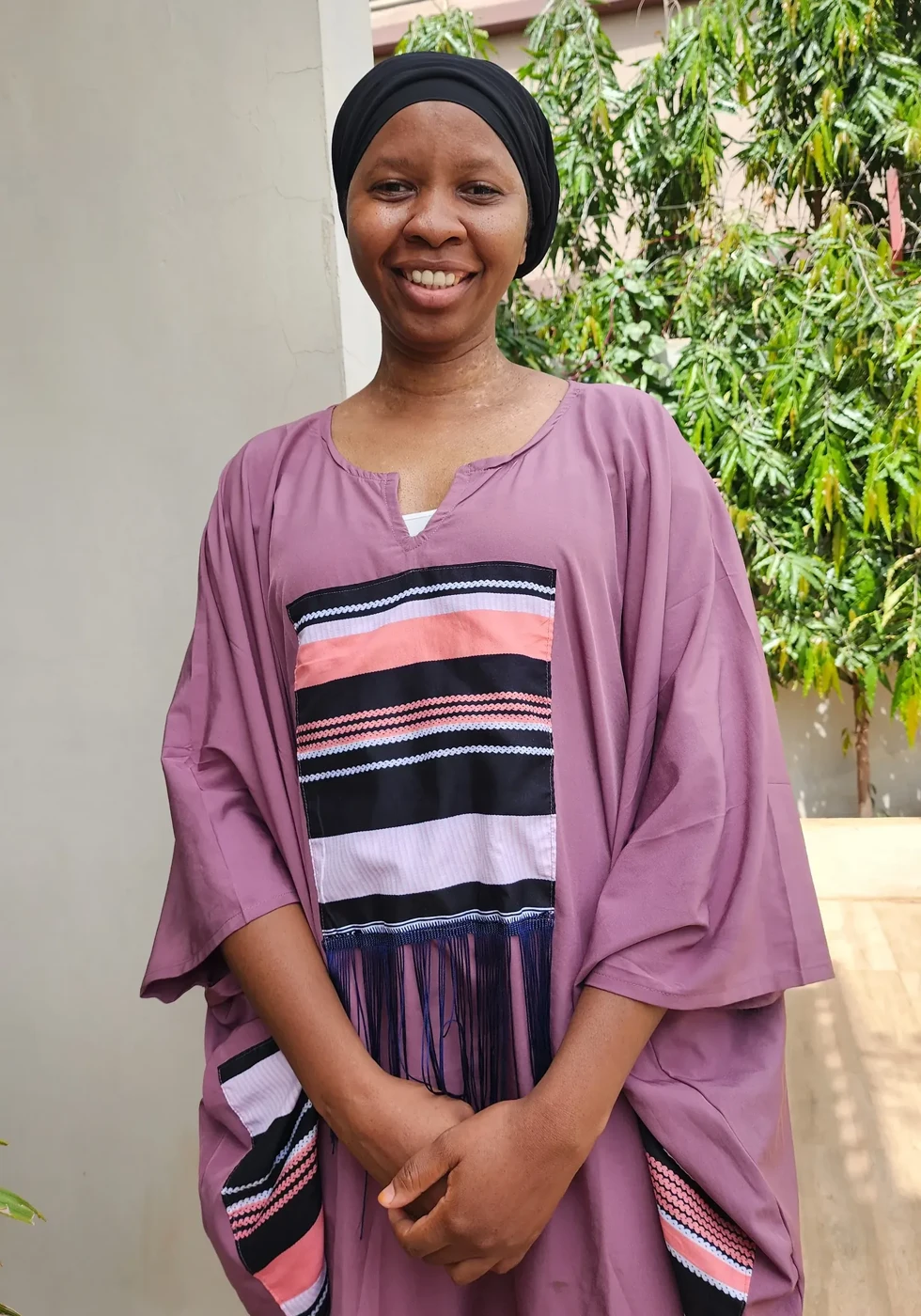
Fatoumata D. joined Kabakoo’s Digital Makers cohort without knowing what UX/UI design was. Speaking in front of people had been stressful. She describes gaining digital skills and confidence through the program’s mindset work and practice.
“Before my training at Kabakoo, I didn’t even know what UX/UI design was.”
She went on to share what she had learned with other young people and mentor learners at Kabakoo. That contribution belongs in the design of a learning community: participants can become people others turn to for help.
Create opportunities to explain, demonstrate, and help a peer. A portfolio can preserve the work; a learning relationship lets it travel. Build peer contributions into the learning sequence.
Source: Kabakoo’s July 2025 update, “Kabakoo Faces.” Photograph: Kabakoo Academies.
Watch the work leave the phone
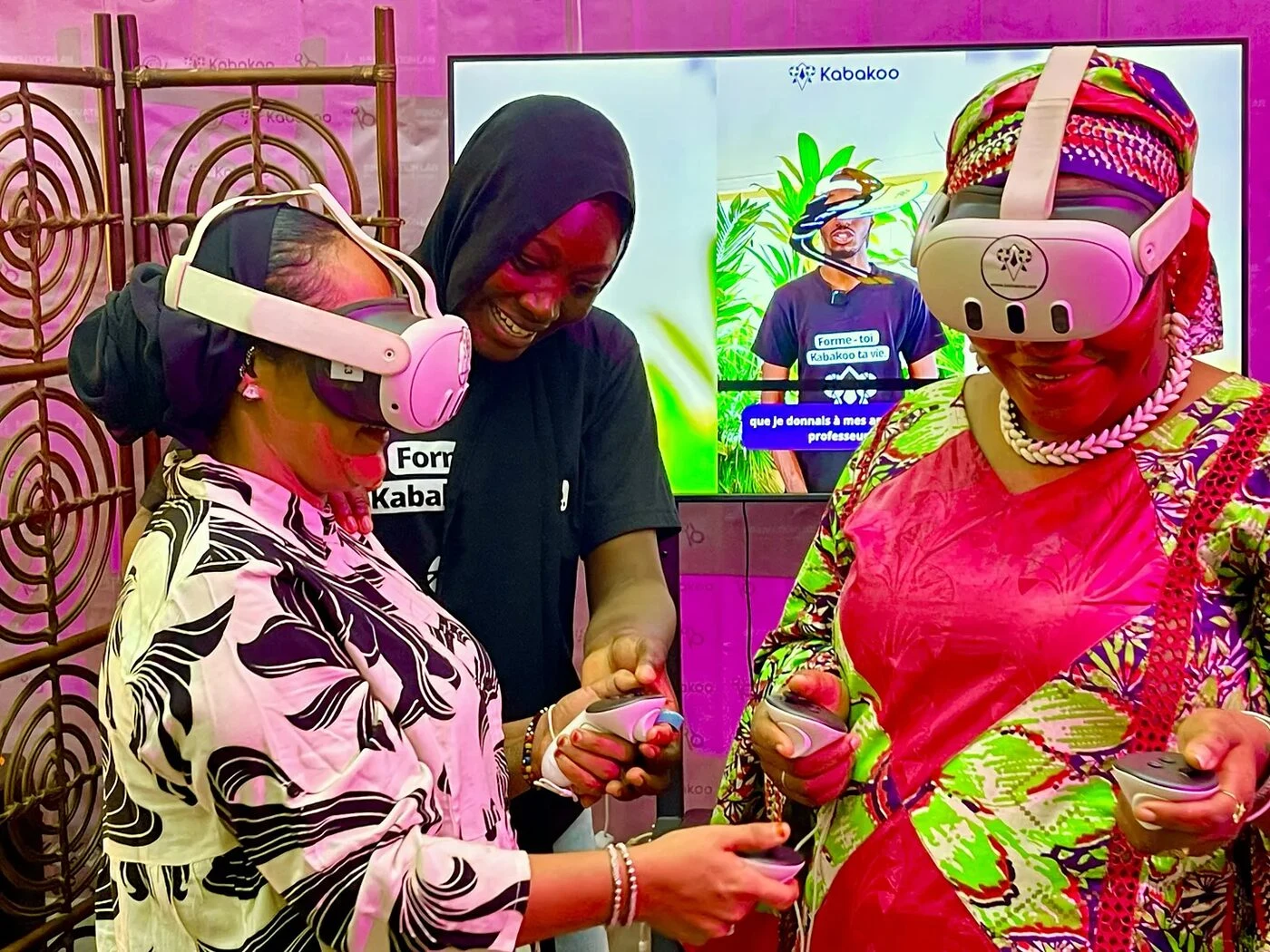
At SENUMA, learners demonstrated experiences and spoke with visitors. One squad member described initially struggling to approach people, then becoming able to present experiences and conduct interviews. The event gave her a real setting in which to practice, encounter questions, and try again. March 2026 update.
Read the interface closely
Follow the invitation, task, and peer connection through Kabakoo’s WhatsApp interface. Select a screen, then use Enlarge screen to inspect the exchange.
The welcome
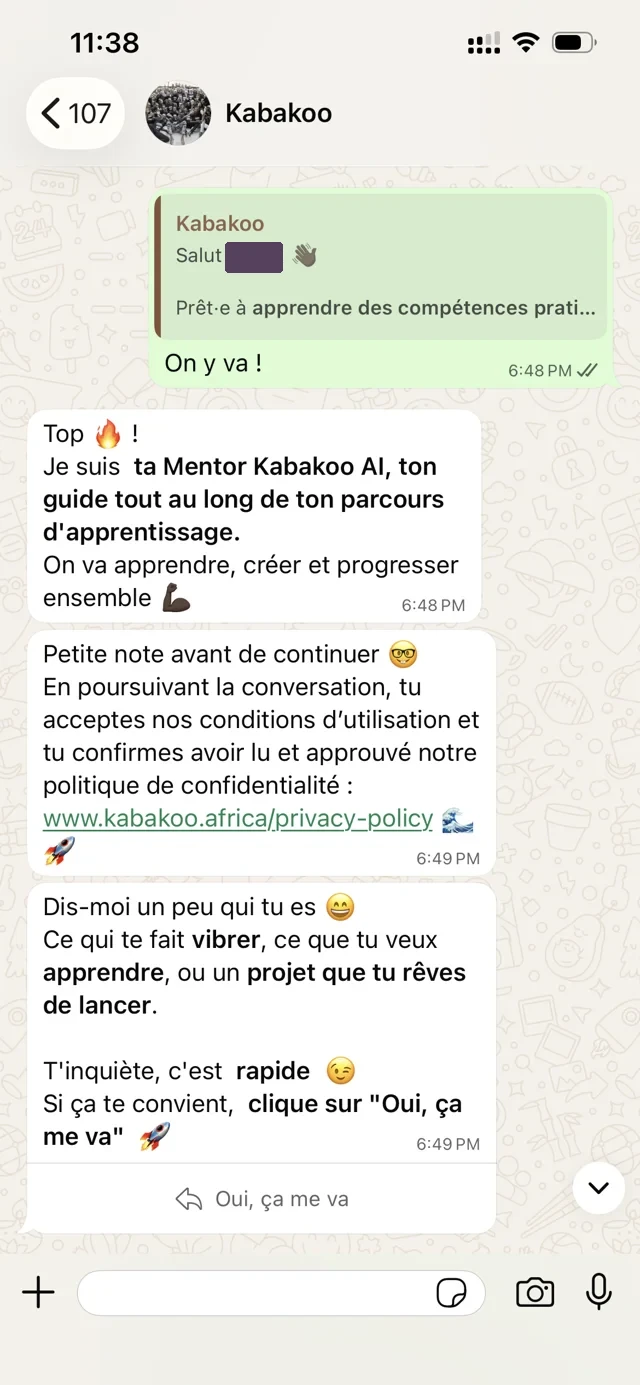
WHAT THE SCREEN ASKS
The sender and the offer
Who is speaking? What help should the learner expect? Does the introduction leave a clear first action?
Motivation
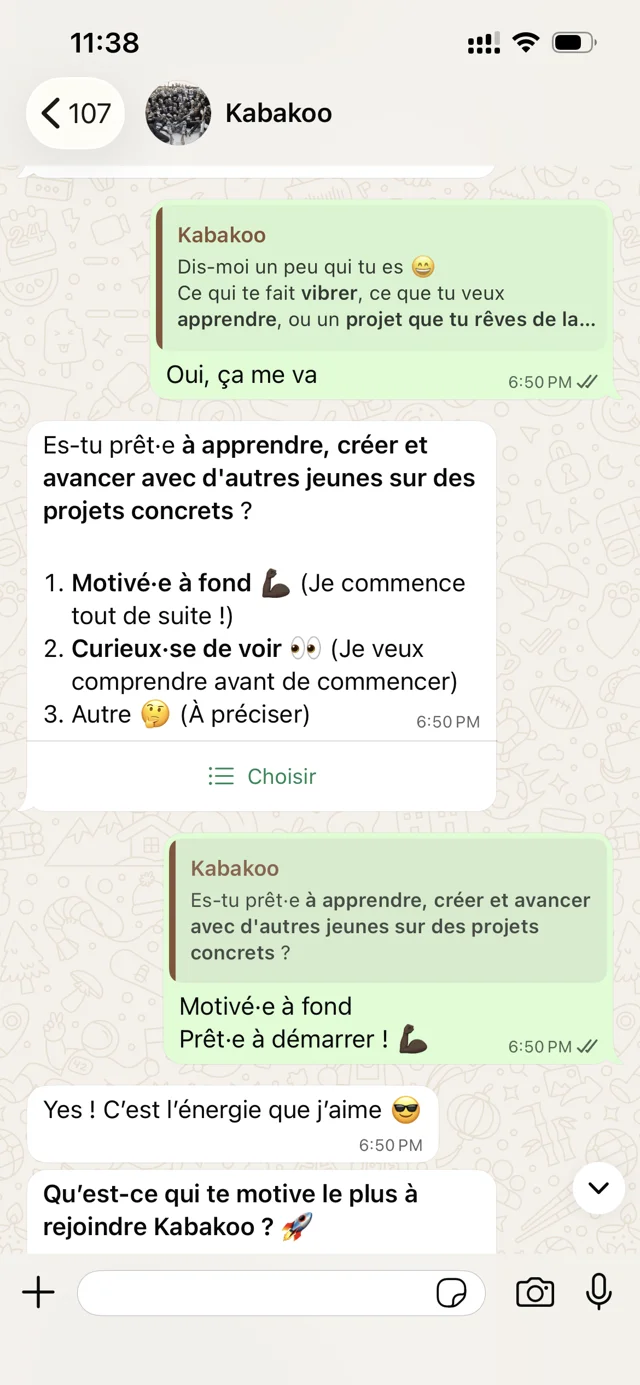
WHAT THE SCREEN ASKS
The reason to begin
Which answer changes the program? Which question could wait until after a useful first task?
Goals
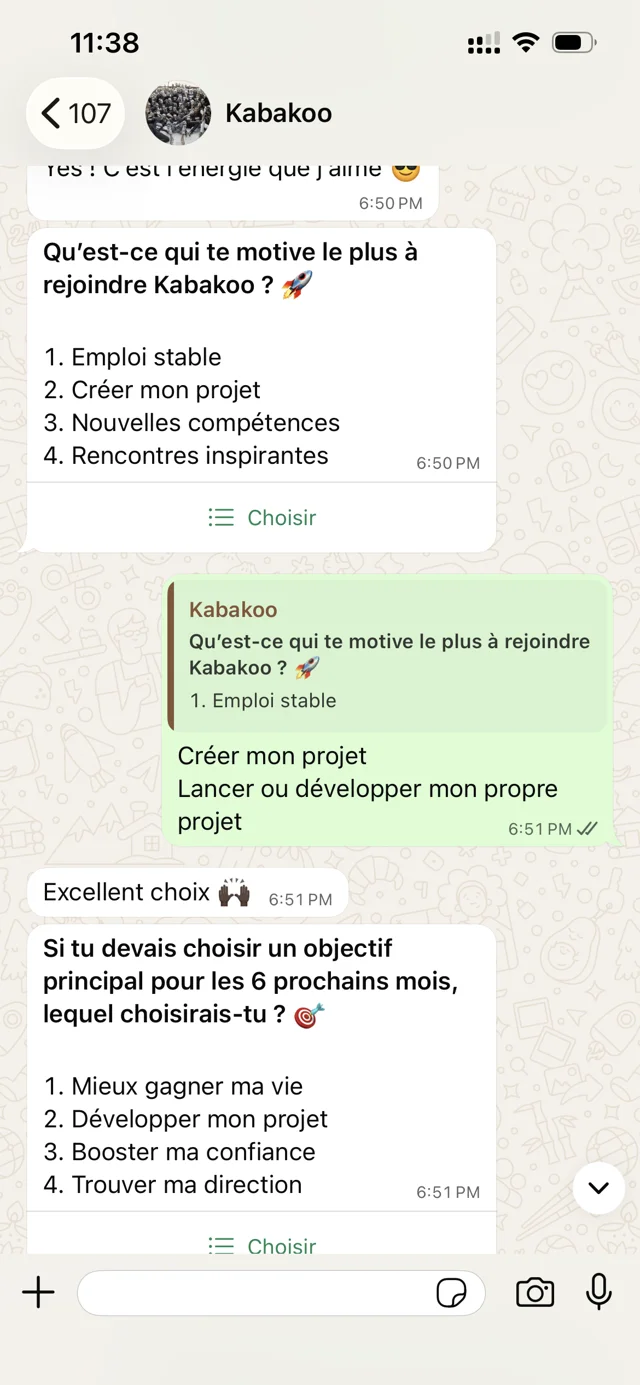
WHAT THE SCREEN ASKS
The person’s own ambition
The menu captures a starting point. A conversation is still needed to understand why this goal matters.
Interests
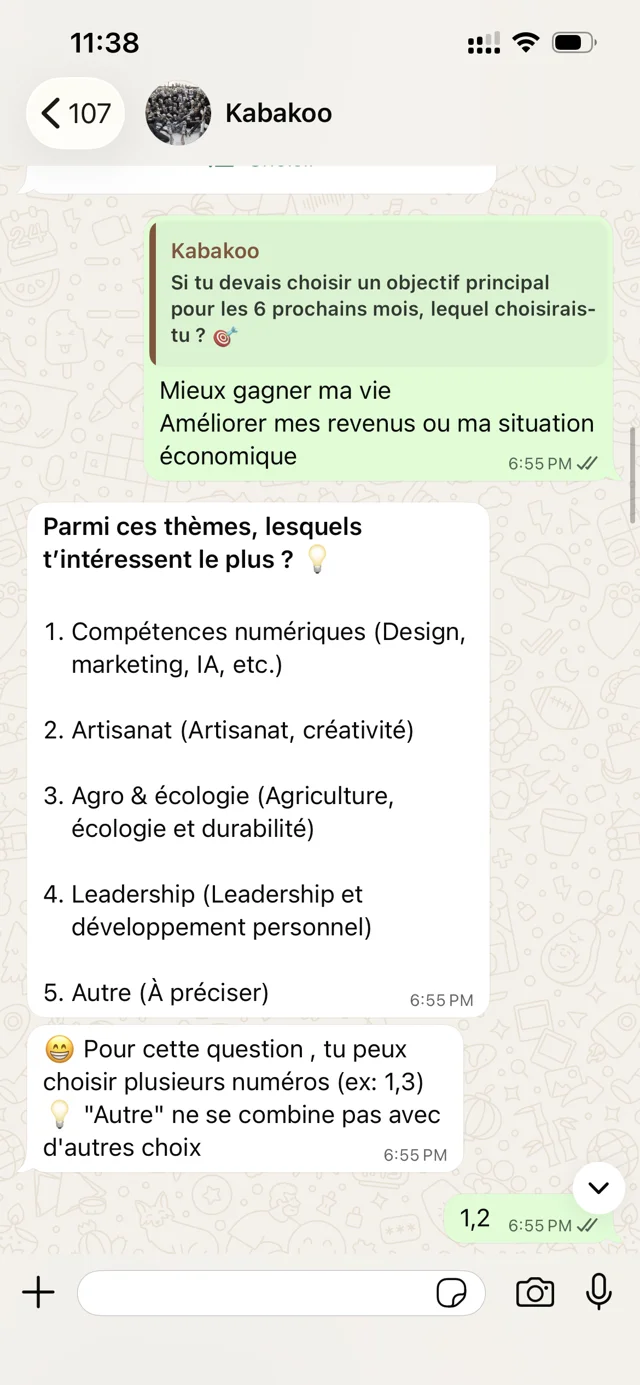
WHAT THE SCREEN ASKS
A route into relevant work
The interests list can inform a task or introduction. Check how the recorded choice actually affects the next step.
Connection
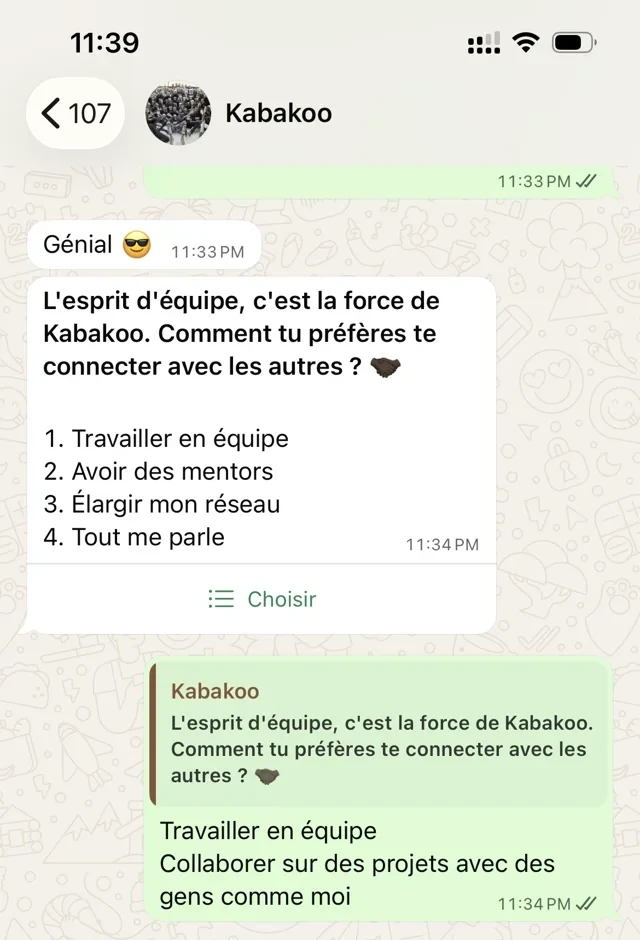
WHAT THE SCREEN ASKS
An opening for relationships
A preference for connection needs a real person, a purpose, and a workable way to meet.
The menu
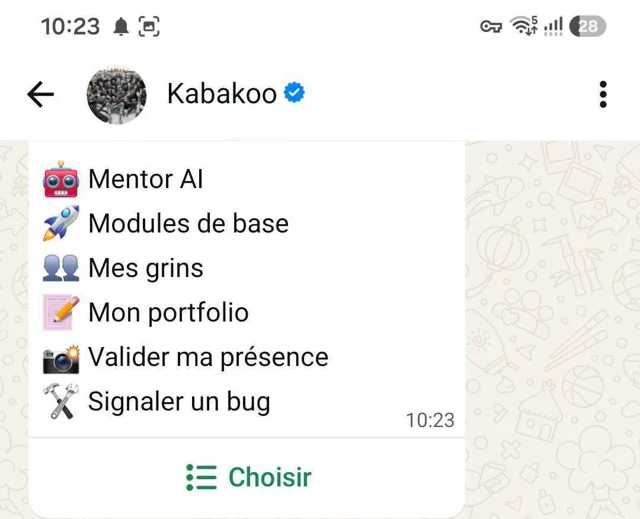
WHAT THE SCREEN ASKS
A route back to the work
Can someone returning after a few days find the task they were doing?
The challenge
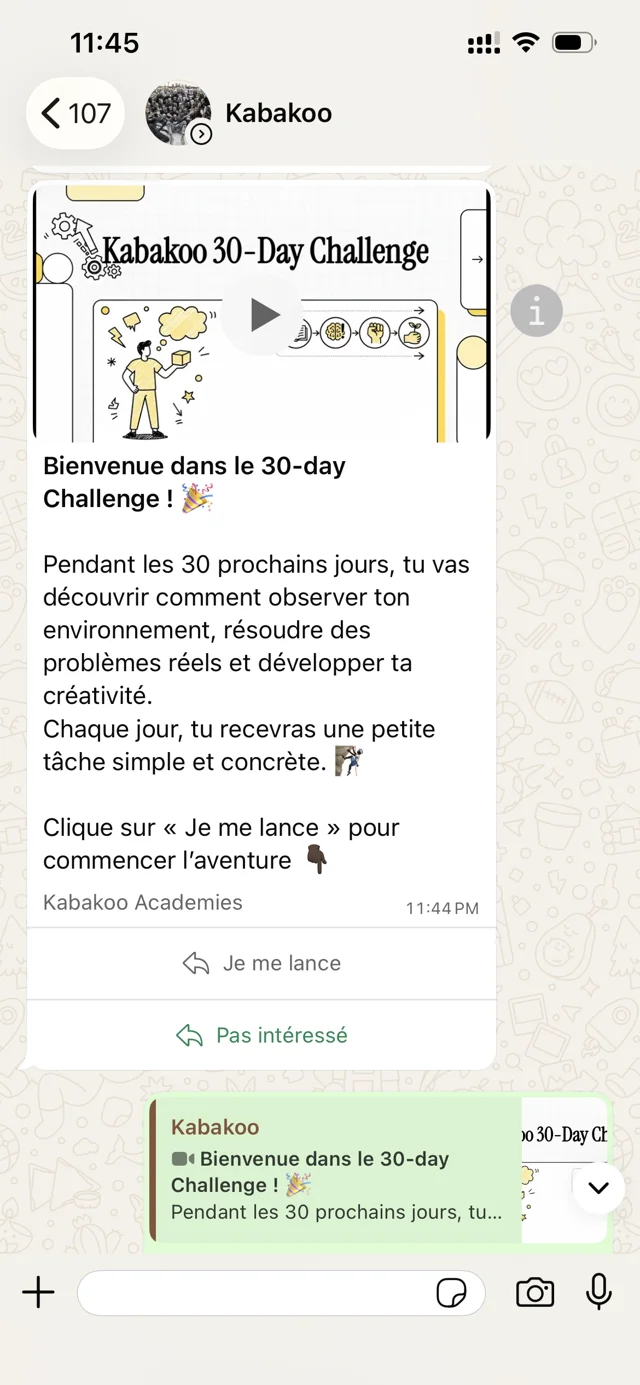
WHAT THE SCREEN ASKS
A rhythm of action
Ask the learner to explain the next task. A program overview is useful only if it leads into something doable.
A module
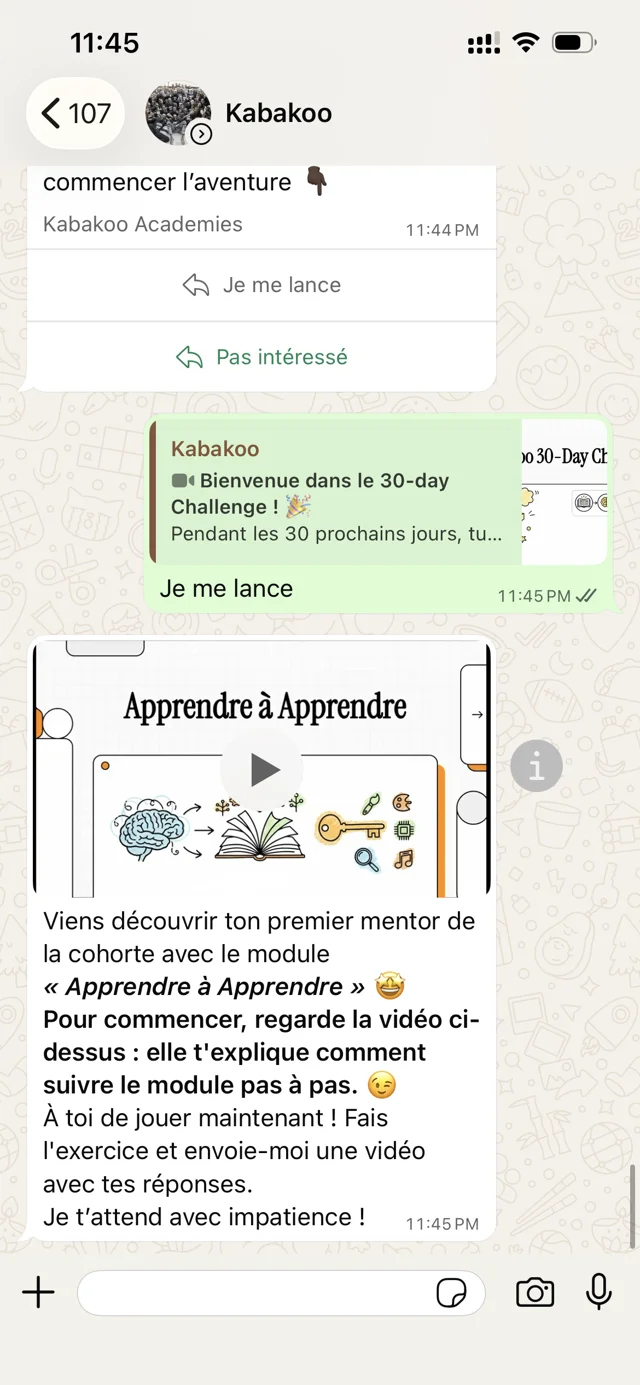
WHAT THE SCREEN ASKS
From content to an attempt
What happens after watching? The learning design needs an attempt, feedback, and an opportunity to revise.
The pod
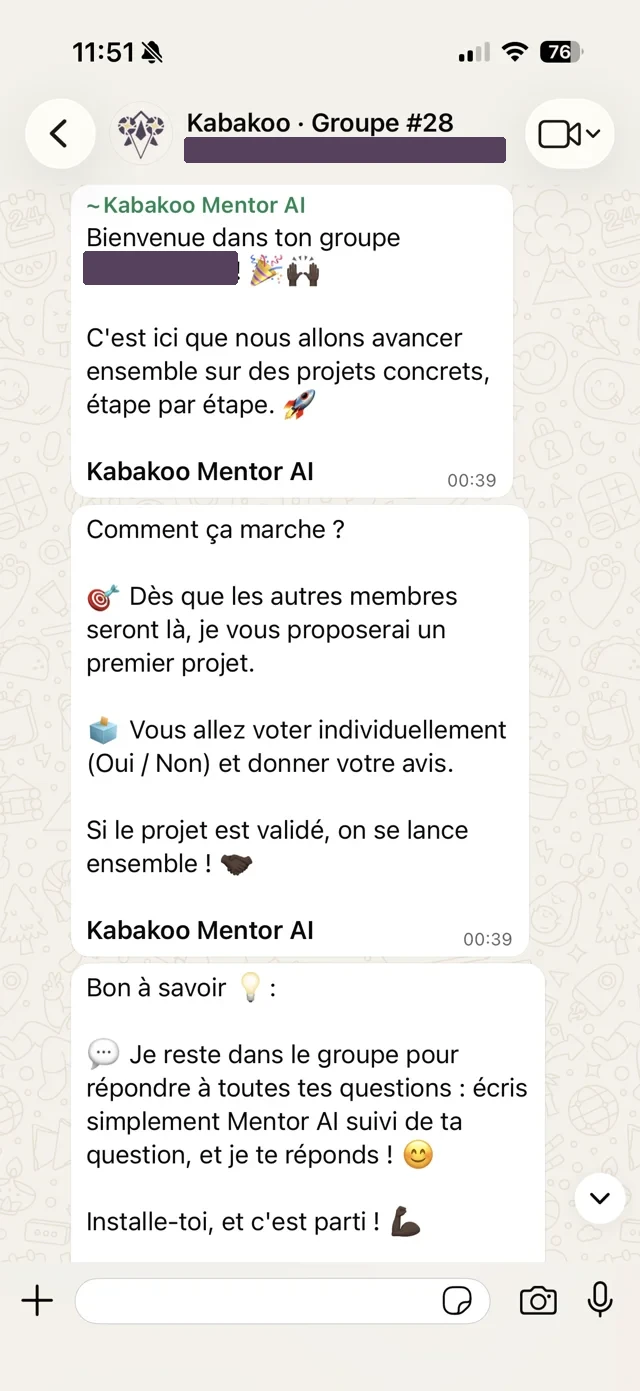
WHAT THE SCREEN ASKS
The AI’s place in a group
When should the mentor answer, and when should it leave space for peers? Observe the conversation after it intervenes.
Use these screens in a research session · Work through the architecture